A radiation meter maxed out at 3.6: the number that hid Chernobyl’s real horror
A radiation meter designed to read no higher than 3.6 Roentgen per hour masked the true scale of the 1986 Chernobyl disaster, a failure at the heart of the story behind Valery Legasov's famous 'debt to the truth.'
Inside a nuclear control room in the early hours of 26 April 1986, a technician looked at a radiation meter reading exactly 3.6 Roentgen per hour and reported the number to his superiors as proof the situation was stable. What nobody said out loud was that the meter was built to max out at precisely that figure. The actual radiation pouring out of the fractured walls of Reactor No. 4 at Chernobyl was already well over 15,000 Roentgen per hour, a lethal dose eating through concrete and steel within minutes of the explosion.
The blast had split the reactor’s core open, and within hours harmful radiation had spread hundreds of kilometres from the site. It remains one of the largest man-made nuclear disasters in history. That single miscalibrated meter, and the false comfort it gave Soviet officials, has become shorthand for a much larger pattern of institutional denial that defined the disaster’s aftermath.
The phrase now associated with that pattern, ‘Every lie we tell incurs a debt to the truth. Sooner or later, that debt is paid,’ comes not from a historical transcript but from screenwriter Craig Mazin, who wrote it for the character of Valery Legasov in the 2019 television series Chernobyl. Legasov, the Soviet chemist who led the emergency response, never said those exact words. What he did do was secretly record hours of audio cassettes describing the cover-up before he died by suicide on 27 April 1988, exactly two years and one day after the explosion.
Those tapes detailed how the Soviet state had long known about a structural flaw in its RBMK reactors: control rods tipped with graphite that, under certain conditions, caused a catastrophic power surge instead of an emergency shutdown. That flaw sent the reactor’s output surging to roughly 30,000 megawatts against a design capacity of just 3,200 MW. In the aftermath, thousands of workers were sent to shovel burning graphite off the roof with inadequate protection, military units culled pets and livestock around Pripyat to stop radiation spreading through fur and meat, and entire layers of topsoil were scraped up and buried under concrete.
When Legasov broke ranks and disclosed the reactor’s design flaws to the international scientific community at a conference in Vienna, the Soviet state moved against him: the KGB monitored him, stripped him of his honours, and cut him off from colleagues. He was rehabilitated only after his death, later receiving the title Hero of the Russian Federation in 1996 along with the Order of Lenin.
The official Soviet death toll from Chernobyl still stands at 31, a figure locked in from 1986 that counts only those killed in the immediate blast and by acute radiation sickness within three months. The World Health Organization estimates the true long-term toll, from cancers among the most exposed clean-up crews and residents, at somewhere between 4,000 and 9,000 deaths.
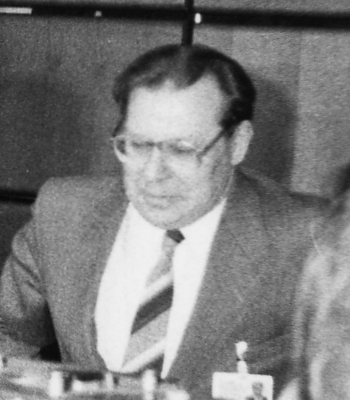
Image credit: Wikimedia Commons/by IAEA Imagebank



Leave a Reply