1,074 farmers just stopped irrigating their fields at midnight
MSEDCL has commissioned Nagpur district's first solar park, giving 1,074 farmers across nine villages eight hours of uninterrupted daytime power for irrigation.
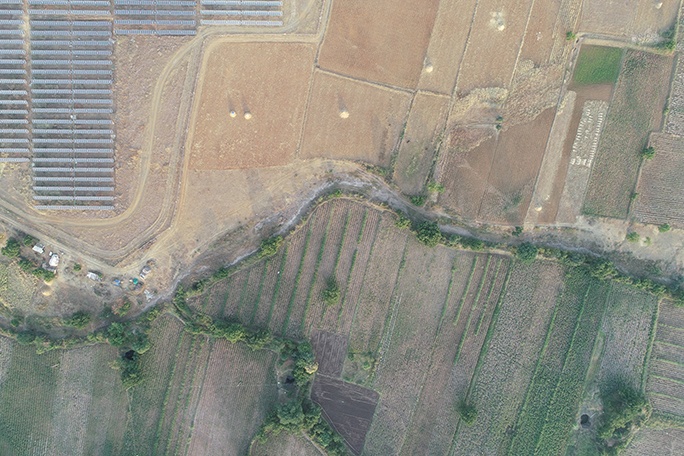
For farmers around Katol taluka in Nagpur district, irrigation has long meant working through the night, when electricity supply was available. That changed on July 16, when MSEDCL commissioned the district’s first solar park at the 33/11-kV Kachari Sawanga substation, switching 1,074 agricultural consumers over to eight hours of uninterrupted daytime power.
The 4-MW facility now supplies electricity to farmers across nine villages — Ridhora, Khapri Kutumba, Ghartwada, Gujar Khedi, Sabkund, Kokarda, Kachari Sawanga, Borkhedi and Panchdhar. MSEDCL officials said the change is expected to ease irrigation planning, reduce hardships for farmers and improve crop productivity across the area.
The solar park was built under Maharashtra government’s Chief Minister Solar Agricultural Feeder 2.0 scheme, which is establishing decentralised solar installations near substations to power agricultural feeders directly. MSEDCL leased the land to a private developer for 25 years and signed a Power Purchase Agreement to buy the electricity generated for under Rs 3 per unit.
Based on MSEDCL’s estimate of Rs 2.5-3 crore per megawatt for solar installations, the developer is understood to have invested roughly Rs 10-12 crore in setting up the 4-MW park. Officials said locating the facility near the substation also reduces transmission losses, keeping the supply more dependable.
MSEDCL said several more solar parks of this kind are currently being developed across Nagpur district, as the utility works to extend daytime power access to more agricultural consumers in the region. The Kachari Sawanga project was overseen by chief engineer Rajesh Naik, superintending engineer Sanjay Wakde, and executive engineers Narendra Katare and Narendra Dhawad.
Naik said the project marks an important step toward ensuring reliable daytime electricity for farmers, while also promoting clean energy and strengthening the rural economy in the region.
Wikimedia Commons/by Kanadaurlauber



Leave a Reply