46 years after SLV-3, India’s first private rocket stands on ISRO’s launchpad
Skyroot Aerospace's Vikram-1 is set to launch from Sriharikota on 18 July, the same launchpad and date ISRO used for its own first rocket, SLV-3, in 1980.
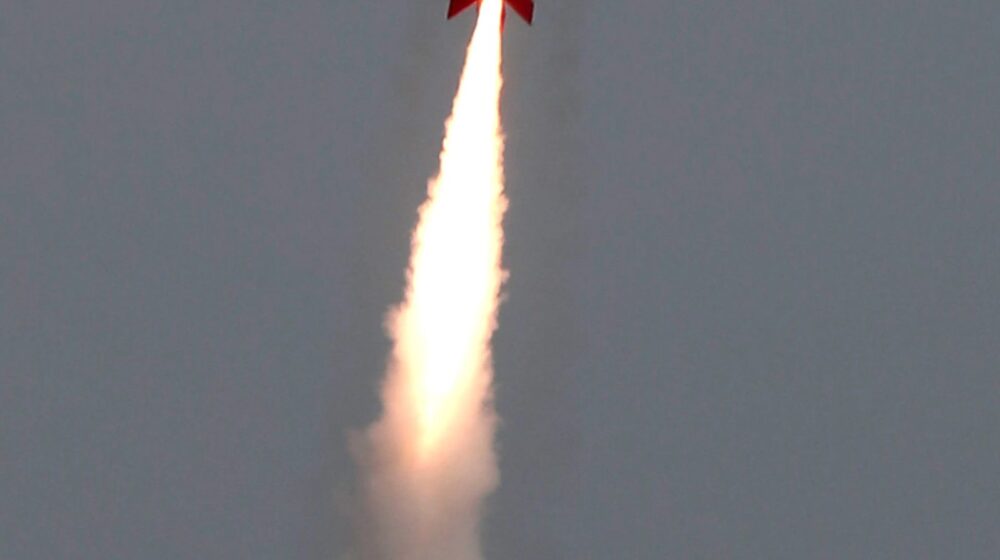
On 18 July 1980, ISRO launched the Satellite Launch Vehicle-3 from Sriharikota, placing the Rohini satellite RS-1 into orbit and making India only the sixth country in the world capable of launching its own satellites. Forty-six years later to the day, a new chapter is set to unfold from the very same spaceport: Skyroot Aerospace’s Vikram-1, India’s first privately developed orbital-class rocket, is scheduled to lift off at 11.30 am on Saturday.
The mission, named Aagaman, is the Hyderabad-based company’s maiden orbital test flight and will fly from the historic first launch pad at the Satish Dhawan Space Centre-Sriharikota Range — the same pad ISRO has used for decades. ‘This is the first time a private rocket is standing on the ISRO launchpad,’ said Pawan Kumar Chandana, co-founder and CEO of Skyroot Aerospace.
SLV-3 was a 22-metre, 17-tonne, all-solid, four-stage experimental vehicle capable of placing 40 kg payloads into low Earth orbit. Vikram-1 stands at the same 22-metre height but is a seven-storey, multi-stage rocket built with an all-carbon composite structure and in-house propulsion systems, including high-thrust solid-fuel boosters and 3D-printed engines, designed to carry satellites of up to 350 kg to low Earth orbit.
Saturday’s test flight is targeting a 450 km orbit at an inclination of 60 degrees. Authorities have issued airspace and maritime notices creating restricted zones along the rocket’s ascent and impact corridor, and Skyroot’s launch control centre has completed final integrated checks along with interface checks with telemetry ground stations and tracking radars.
‘We have done everything that could be done to test Vikram-1 on ground,’ Chandana said. ‘On July 18, we are eager to see how Vikram-1 performs in real flight environment for the first time. This is our first test flight, and we will be getting valuable data from it.’ Co-founder and COO Naga Bharath Daka said the launch represents the work of around 1,000 people and more than 400 suppliers.
Founded in 2018 by Chandana and Daka, both former ISRO scientists in their late 30s, Skyroot developed Vikram-1 over nearly four years — a timeline Chandana says is unusually fast for orbital rocket development, which typically takes eight to 10 years globally. The company became India’s first spacetech unicorn in May this year, with a valuation of more than $1.1 billion, and had earlier made history on 18 November 2022 when its two-storey Vikram-S became the first privately built Indian rocket to reach space on a suborbital flight.
Wikimedia Commons/by ISRO




Leave a Reply