He failed school twice, then invented medicines the world still can’t live without
Yellapragada Subbarow failed his school exams twice before going on to help develop folic acid supplementation, the first tetracycline antibiotic, and the drug behind modern cancer treatment.
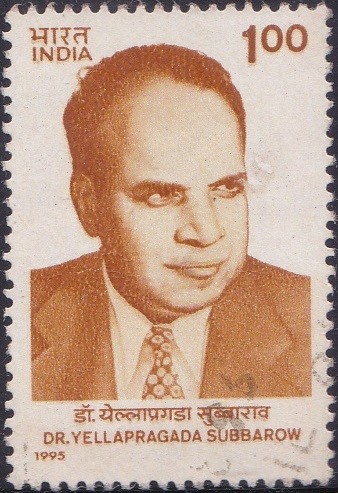
Yellapragada Subbarow failed his school examinations twice before finally passing on his third attempt. Financial constraints made higher education difficult, and it was only with support from his future father-in-law, who helped him buy medical textbooks, that he was able to complete his medical education in India.
In 1922, Subbarow travelled to the United States with limited financial resources but an extraordinary ambition: to pursue scientific research that could improve human health. At Harvard Medical School, he joined the Department of Biochemistry and, working with biochemist Cyrus Fiske, developed the Fiske-Subbarow method, a laboratory technique for estimating phosphorus in biological samples that remains important in laboratory medicine today.
In 1940, Subbarow joined Lederle Laboratories in New York, where he led research with an enduring impact on medicine. His work on folic acid helped establish why the vitamin is now recommended during pregnancy worldwide to reduce the risk of neural tube defects. That research also laid the foundation for aminopterin, one of the earliest drugs shown to induce remission in childhood leukaemia, which eventually led to methotrexate, still an essential treatment for several cancers and conditions like rheumatoid arthritis.
Subbarow’s leadership also contributed to the discovery of Aureomycin, the first tetracycline antibiotic, and diethylcarbamazine, a medicine still recommended by the World Health Organization to help eliminate lymphatic filariasis, commonly known as elephantiasis.
He died in New York on August 8, 1948, at just 53, without ever winning a Nobel Prize. But decades later, scientists continue to regard him as one of the most influential biomedical researchers of the 20th century.
Image: Wikimedia Commons



Leave a Reply