No haemoglobin, no myoglobin: how one fish beats Antarctica’s freezing seas
The Antarctic icefish survives without haemoglobin by growing an oversized heart, more blood volume and wider vessels to move oxygen through its body.
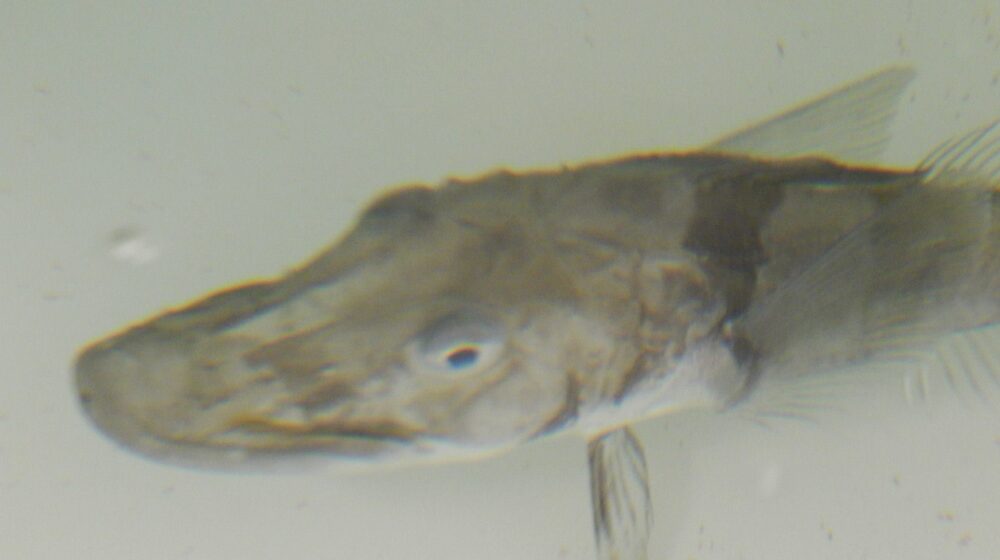
The Antarctic icefish’s most striking feature isn’t visible from the outside: it’s what’s missing from its blood. This fish, from the family Channichthyidae, has no red blood cells and no haemoglobin as an adult, and in some species, no myoglobin either. Its blood runs pale, watery and nearly clear, a trait no other known vertebrate shares.
To make up for that missing oxygen-carrying capacity, the icefish’s anatomy changed substantially over time. Its heart grew to four to five times larger relative to its body size than the hearts of related red-blooded fish. It carries up to four times more blood, and its blood vessels are far wider than those of its relatives, all working together to circulate a greater volume of thin, oxygen-poor blood more quickly through the body.
That adaptation isn’t free. Icefish spend roughly twice as much energy pumping blood as their red-blooded relatives, according to a 2006 commentary published in the Journal of Experimental Biology by Bruce D. Sidell of the University of Maine and Kristin M. O’Brien. Their paper, titled ‘When bad things happen to good fish: the loss of haemoglobin and myoglobin expression in Antarctic icefishes’, explains that the icefish did not lose haemoglobin because doing so helped it. The loss came from a genetic mutation, and it left the icefish’s blood able to carry less than 10% of the oxygen carried by closely related red-blooded fish.
Several icefish species independently lost myoglobin too, the protein that stores oxygen in muscle tissue, each through a different mutation occurring at a different time. Researchers found this surprising, because a heart containing myoglobin typically performs better under physical stress, meaning its loss should have made the icefish’s heart less efficient rather than more.
The Southern Ocean itself may explain how the icefish gets away with it. Cold water holds far more dissolved oxygen than warm water, and near the Ross Ice Shelf, where temperatures drop to around -1.9°C, the surrounding water is nearly saturated with oxygen. That abundance allows icefish to absorb oxygen directly through their blood plasma and their scaleless skin, easing their reliance on haemoglobin. Icefish also evolved from slow-moving fish with naturally low energy needs, making it easier to survive with far less oxygen-carrying capacity than faster-swimming species require.
Scientists believe a signalling molecule called nitric oxide may be another piece of the puzzle. Losing haemoglobin and myoglobin also meant losing one of the main ways of breaking nitric oxide down, which the researchers suggest caused its levels to rise throughout the icefish’s body. That rise, they propose, may have triggered many of the physical changes now seen in the species, as its body gradually adapted around the loss of two proteins that almost every other vertebrate cannot live without.
Wikimedia Commons/by Ambiederman


Leave a Reply