Meet Tama, the stray cat Japan appointed as a station master
A stray calico cat named Tama was appointed honorary station master of a struggling Japanese railway in 2007, and went on to generate more than ¥1.1 billion in economic impact for the region.
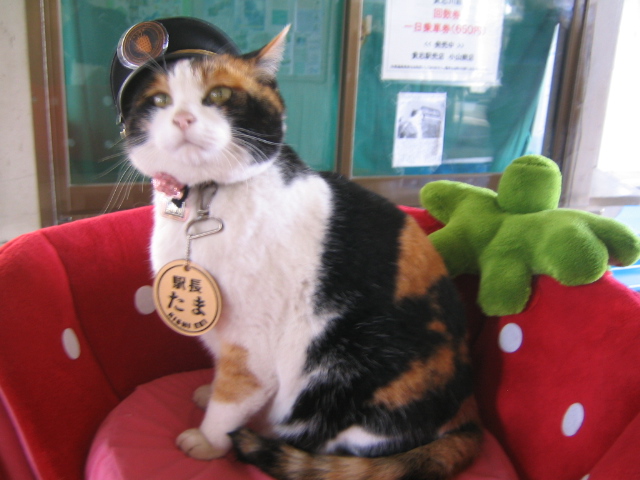
In Japan’s Wakayama Prefecture, a rural railway line was staring at closure. The Kishigawa Line, operated by Wakayama Electric Railway, had been losing passengers for years, and after the company took over the route’s operations in 2006, it needed a way to draw people back without spending heavily on infrastructure or marketing.
The answer turned out to be a stray calico cat that already lived near Kishi Station and was popular with locals. In 2007, railway president Misutaka Kojima appointed her as the line’s honorary station master. The cat, named Tama, was given a custom-made station master’s cap and put to work greeting passengers as they arrived and departed.
The appointment drew attention far beyond Wakayama. Within the first year, passenger numbers on the line rose by 17%, according to Wakayama Electric Railway, as visitors began travelling from across Japan and overseas specifically to see the feline station master. Fans bought souvenirs, rode the railway, and turned Kishi Station into an unlikely tourist stop.
The railway leaned into the moment, introducing Tama-themed trains and cat-inspired merchandise, and eventually rebuilding Kishi Station itself with a roof shaped like a cat’s face. Professor Katsuhiro Miyamoto of Kansai University later estimated that Tama’s popularity generated approximately ¥1.1 billion in economic activity during her first year on the job, a figure that included tourism spending, merchandise sales, and wider regional business generated by her fame.
Tama’s influence eventually earned her a further promotion, to Operating Officer of the railway, and business schools and tourism experts began citing her as a textbook example of place branding built on an authentic local story rather than a conventional ad campaign. When she died in 2015, thousands attended memorial events held in her honour, and she was commemorated in a traditional Shinto ceremony before being memorialised at a local shrine connected to the railway.
Wikimedia Commons/by Sanpei




Leave a Reply