Nanoplastics have now been found in one of Earth’s most untouched places
Scientists have detected nanoplastics, including tyre-wear particles, in Antarctic soil for the first time, raising new concerns about airborne plastic pollution.
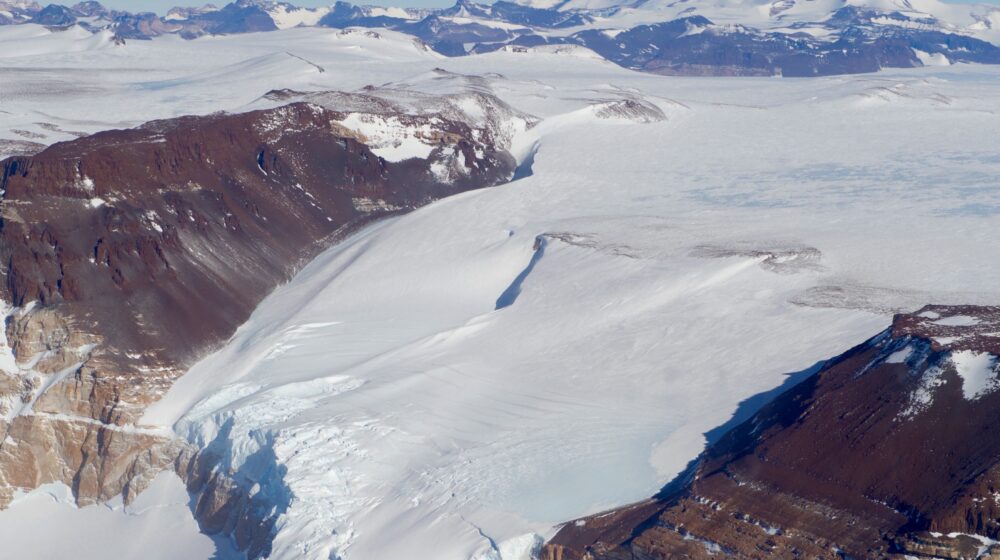
Scientists have detected nanoplastics in Antarctic soil for the first time, providing fresh evidence that tiny plastic particles can travel through the atmosphere and reach some of the most remote places on Earth.
The study, published in Scientific Reports, found nanoplastics in soils from the McMurdo Dry Valleys, one of the coldest and driest regions on the planet. Researchers say the findings suggest plastic pollution is no longer confined to populated or industrialised areas and may now be present even in the Antarctic interior. Among the particles identified were fragments from tyre wear, along with five other common plastics used in everyday products, pointing to a combination of local human activity and long-range atmospheric transport as likely sources of contamination.
Microplastics have become a growing environmental concern in recent years, but scientists say nanoplastics could present an even greater challenge. Nanoplastics are plastic particles measuring less than one micrometre across, which means they can remain suspended in the air more easily, pass through cell membranes, and carry other pollutants on their surfaces. Scientists have already detected nanoplastics in remote locations such as Greenland and the Alps, but Antarctic soils, particularly those far from the coastline, had remained one of the few places where nanoplastics had not been reported until now.
Researchers collected soil samples from the Taylor and Wright valleys, two of Antarctica’s largest ice-free Dry Valleys, in the McMurdo Dry Valleys during January 2023, analysing 13 topsoil samples along with four samples taken from depths greater than 20 centimetres. Nanoplastics were detected above the method’s detection limit in 54 percent of the topsoil samples, with the highest concentration measured reaching 295 nanograms per gram of soil. The particles were also found in half of the deeper soil samples, though at lower concentrations.

Leave a Reply