A 1962 landfill fire is still burning under a Pennsylvania town, 60 years later
A routine landfill burn in Centralia, Pennsylvania in 1962 ignited an underground coal fire that is still burning more than six decades later.
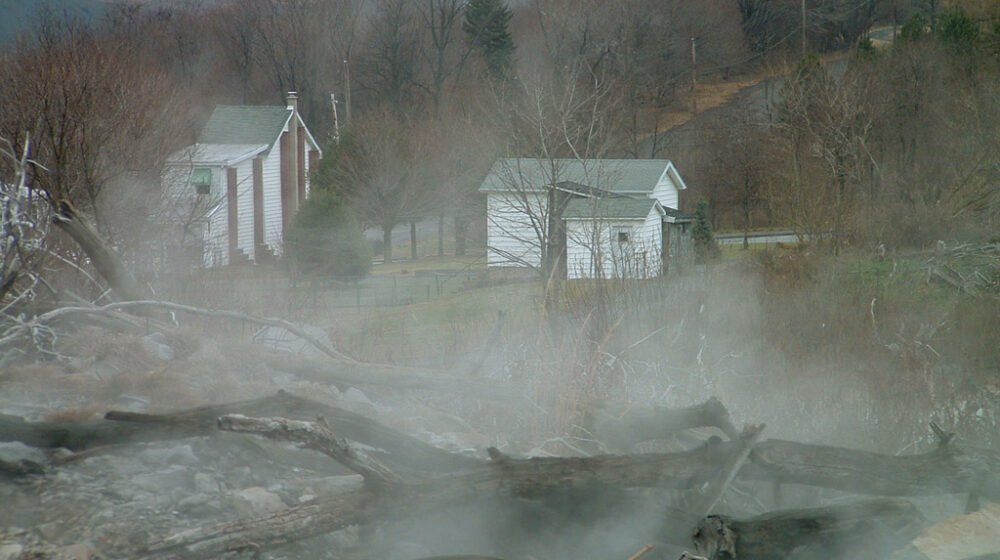
What began as a routine pre-Memorial Day cleanup became one of America’s longest-running environmental disasters. In May 1962, officials in the small Pennsylvania town of Centralia ignited a landfill in an abandoned strip-mining pit to reduce accumulated trash, a common practice at the time.
Instead of burning out, the flames reached the exposed Buck Mountain anthracite coal seam, igniting an underground fire that spread through a network of abandoned mine tunnels beneath the town. More than six decades later, the fire is still burning, making Centralia one of the world’s best-known examples of an uncontrolled underground coal fire.
Researchers say Centralia’s geology made the fire exceptionally difficult to extinguish. According to the International Journal of Coal Geology, the Buck Mountain coal seam lies beneath fractured, moderately dipping rock layers that continuously allow oxygen to circulate underground, feeding the combustion. As the fire expanded through the 1960s, 1970s and early 1980s, it advanced along multiple underground fronts, producing carbon monoxide and causing dangerous ground instability.
Engineers tried nearly every available technique to stop it — flooding sections of the mine with water and rock slurry, building fly-ash barriers, excavating trenches, and attempting to isolate the burning coal. None worked. One of the active fire fronts has continued advancing at roughly 20 metres a year, a pace that has remained remarkably consistent over decades.
Leave a Reply